'The Moon hangs with Venus': Celestial alignment offers a dazzling display
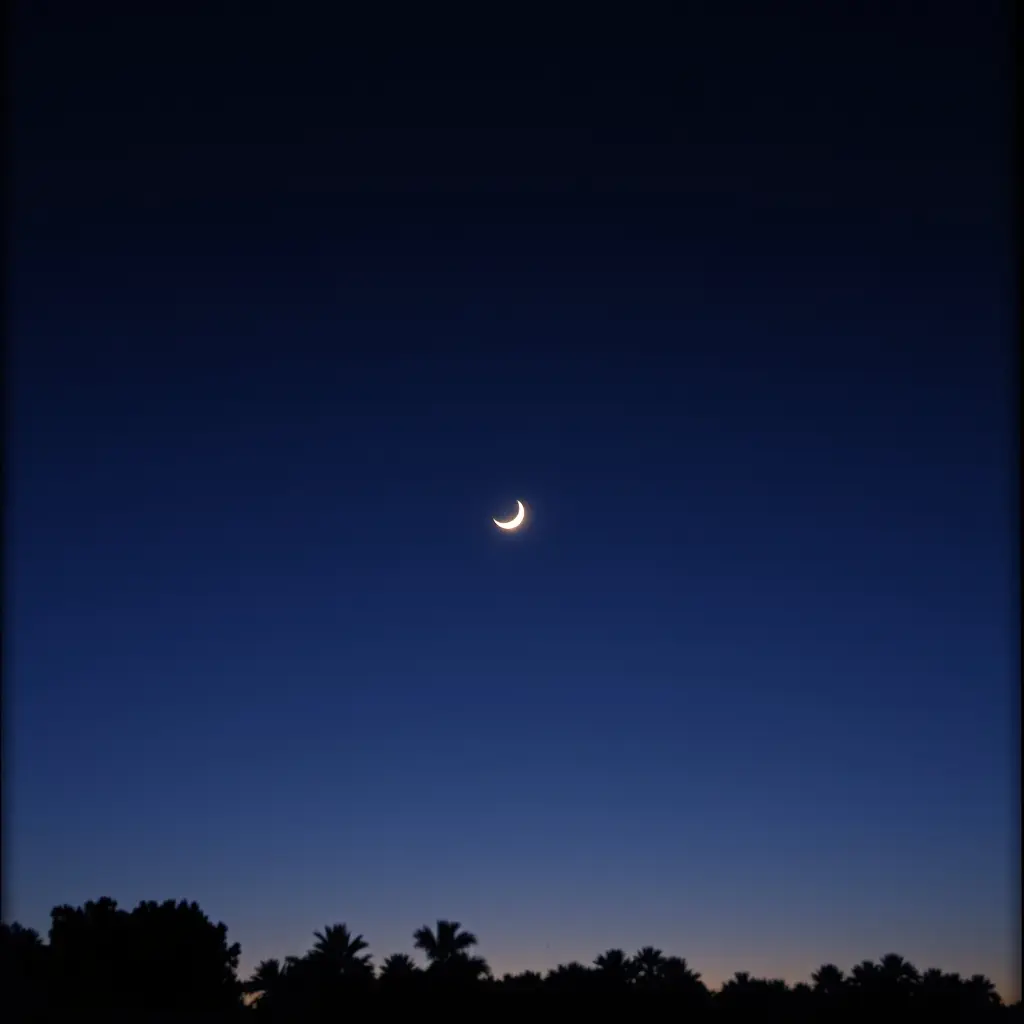
The Celestial Dance
On Sunday, August 16, 2026, stargazers were treated to a striking conjunction in the night sky as the Moon appeared close to the planet Venus. This astronomical event, where two celestial bodies appear close together from Earth's perspective, is a recurring phenomenon driven by the orbital mechanics of our solar system. The Moon, Earth's only natural satellite, orbits our planet approximately every 27.3 days, while Venus orbits the Sun much faster, completing its journey in about 225 Earth days. As their orbits intersect at various points, these close encounters become visible.
The apparent proximity of the Moon and Venus is a visual illusion caused by their alignment from our vantage point on Earth. In reality, the Moon is a mere 240,000 miles away, while Venus can be as far as 162 million miles from Earth. This particular alignment also featured the star Spica, the brightest star in the constellation Virgo, adding another point of interest to the celestial tableau. Spica, a blue-white supergiant, is vastly larger and more luminous than our Sun and is located hundreds of light-years away.
How the Alignment Works
The apparent closeness of celestial objects in the sky is a result of their positions relative to Earth and the Sun. The Moon orbits the Earth, and as it does, it passes through different parts of the sky as seen from our planet. Venus, being an inner planet to Earth's orbit around the Sun, often appears close to the Sun in our sky. When the Moon, in its orbit around Earth, also happens to be in the same general direction as Venus from our perspective, a conjunction occurs.
These events are predictable and are calculated based on the precise orbital paths and speeds of the Moon and planets. Astronomers use sophisticated software and ephemerides (tables of astronomical data) to predict such alignments years in advance. The specific appearance of the conjunction—whether it's a sliver of a crescent Moon next to a bright Venus, or a fuller Moon further apart—depends on the exact phase of the Moon and the relative positions of Earth, the Moon, and Venus in their orbits at that specific time.
Who is Affected and How
For the average person, these celestial events offer a moment of wonder and connection to the wider universe. They require no special equipment, often being visible to the naked eye, and provide a free, accessible spectacle. For amateur astronomers, these conjunctions offer opportunities for observation, photography, and learning more about celestial mechanics. The visibility of Venus, often referred to as the "morning star" or "evening star" depending on its position relative to the Sun and Earth, is a common point of interest for skywatchers.
These events can also serve as a reminder of the vastness and order of the cosmos. While the term 'anti-Mars' might be used colloquially to describe a bright object that is not Mars, it highlights how people often orient themselves in the sky by comparing visible objects to familiar celestial bodies. The presence of Venus, often the brightest "planet" visible, can sometimes be mistaken for other objects, leading to public interest and sometimes, as noted in some reports, unnecessary alarm if not properly identified.
What Happens Next
Conjunctions between the Moon and planets, including Venus, occur regularly. The Moon's rapid orbit means it will appear to move significantly against the background stars and planets over a period of just a few days. Venus will continue its own journey through the solar system, becoming more or less prominent in the evening or morning sky depending on its orbital position relative to Earth and the Sun.
Future celestial events of interest will continue to be predictable. For instance, the Moon will have other conjunctions with planets like Jupiter and Saturn throughout the year. The precise timing and visibility of these events will depend on geographical location and atmospheric conditions. For those interested in astronomy, resources like sky-watching apps and astronomical calendars can provide advance notice of upcoming notable alignments, allowing for planning and observation of these recurring cosmic displays.
Share this article
Send the story to readers on social or messengers.
Comments
Loading comments…

New Times Reporter
Editorial coverage from New Times Reporter.