What causes SpaceX launches to create ‘jellyfish clouds’?
The Background: Space Debris and Atmospheric Effects
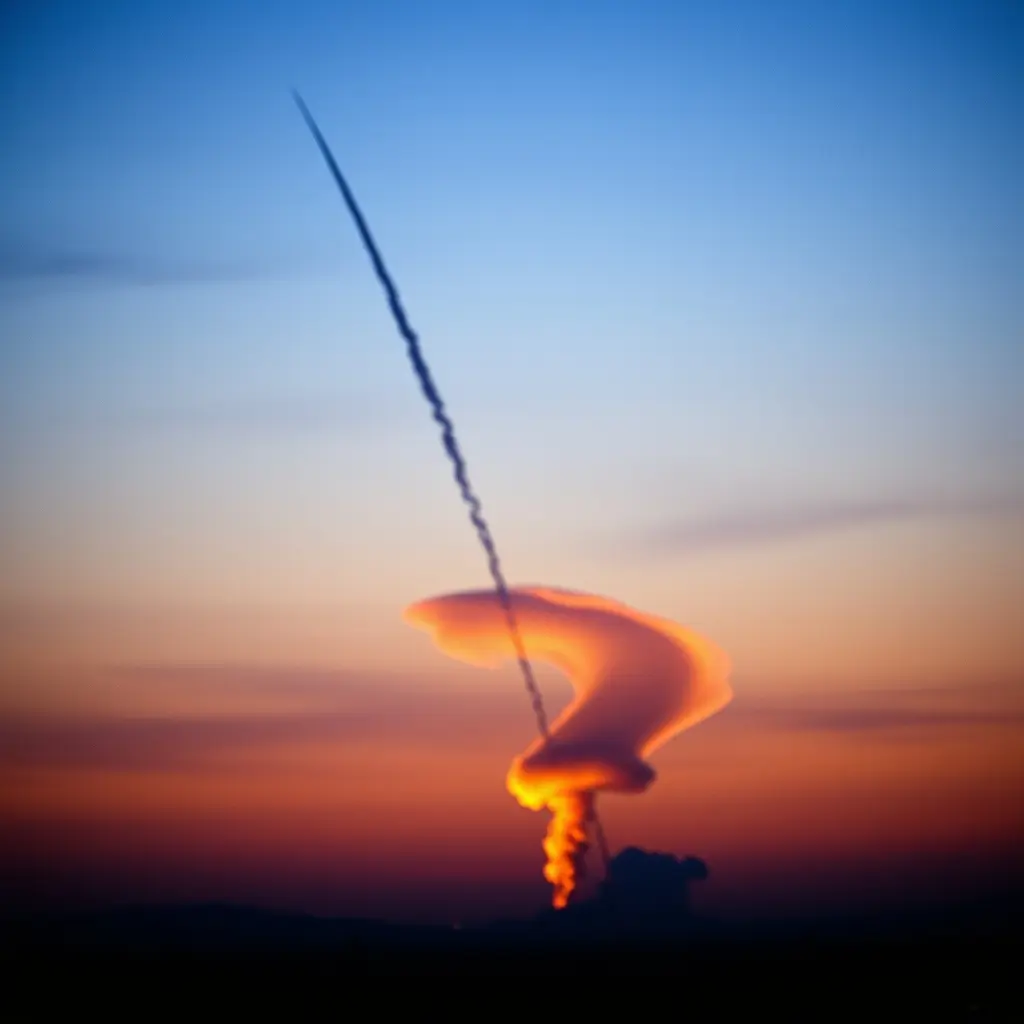
The striking visual phenomenon described as a ‘jellyfish cloud’ or ‘space jellyfish’ is a recurring, albeit unpredictable, side effect of certain SpaceX rocket launches. These displays occur when the second stage of a SpaceX Falcon 9 rocket expels residual fuel and oxidizer at high altitudes shortly after stage separation. The interaction of these expelled chemicals with the upper atmosphere, particularly the ionosphere, creates luminous, expanding plumes that can be visible for hundreds of miles.
These events are not indicative of a malfunction but rather a consequence of the specific propulsion systems and trajectories employed by SpaceX. The Falcon 9 rocket uses a hypergolic propellant combination of RP-1 (kerosene) and liquid oxygen (LOX) for its first stage, and a mixture of RP-1 and LOX for its second stage. The ‘jellyfish’ effect is primarily associated with the second stage's engine burns and subsequent venting of unused propellants or exhaust gases.
The Mechanism: How the ‘Jellyfish Cloud’ Forms
The ‘jellyfish cloud’ phenomenon begins after the second stage of the Falcon 9 rocket has completed its primary task of propelling the payload into orbit or towards its destination. At altitudes typically between 100 and 250 miles (160 to 400 kilometers) above Earth, the second stage performs maneuvers that may involve venting excess propellant or engine purge cycles. This venting releases unburned fuel and oxidizer into the extremely thin atmosphere of the upper mesosphere and lower thermosphere.
At these altitudes, the atmospheric pressure is incredibly low, and the molecules are far apart. The expelled gases, containing various chemical compounds including water vapor, carbon dioxide, and trace amounts of other combustion byproducts, interact with the ambient atmospheric gases and solar radiation. This interaction can cause the gases to ionize and fluoresce, creating a glowing, ethereal cloud. The characteristic shape, often resembling a jellyfish with a central mass and trailing tendrils, is due to the way the gases expand and are influenced by residual engine thrust and the Earth's magnetic field.
Who is Affected and How
The primary individuals affected by these ‘jellyfish cloud’ events are observers on the ground who happen to be in the right place at the right time. Residents and photographers along the US East Coast, from Florida to states like Indiana and Massachusetts, have reported witnessing these spectacular displays. The visual impact is one of awe and wonder, often leading to widespread public interest and speculation, as seen in social media posts and local news reports.
For SpaceX and NASA, these events, while visually striking, are generally considered a minor operational footnote. They do not typically impact the success of the mission or the payload delivery. However, the public fascination can sometimes lead to questions about rocket safety and environmental impact, requiring communication efforts to explain the natural atmospheric science behind the phenomenon. For astronomers and atmospheric scientists, these events offer rare opportunities to study the composition and behavior of the upper atmosphere.
What Happens Next and What Would Have to Be True
Future ‘jellyfish cloud’ events are contingent on SpaceX continuing to use its Falcon 9 rocket for missions that involve second-stage burns or venting at high altitudes. The frequency and visibility of these displays will depend on several factors: the specific mission profile, the trajectory of the rocket, the time of day (daylight or darkness affects visibility), and the location of observers relative to the launch path and the atmospheric disturbance.
For the phenomenon to continue, SpaceX must maintain its current launch operations and propulsion system designs. If SpaceX were to transition to different rocket models with different fuel types or engine designs, or if operational procedures changed to eliminate high-altitude venting, these displays could cease. For the clouds to be widely visible, launches must occur when observers on the ground are positioned to see the plumes against the backdrop of the sky, often shortly after sunset or before sunrise when the upper atmosphere is still illuminated by the sun while the ground is in darkness. Continued public interest and media coverage will also ensure that these events remain a topic of discussion.
Share this article
Send the story to readers on social or messengers.
Comments
Loading comments…

New Times Reporter
Editorial coverage from New Times Reporter.