Why did Trump give Xi Jinping a rare planeside welcome?
The Background: A Diplomatic Balancing Act
Chinese President Xi Jinping's arrival in Washington for a state visit was marked by an unusual personal greeting from President Donald Trump at Joint Base Andrews. This gesture, which included a red carpet, honor guard, and a flyover, aimed to mirror the pageantry Trump experienced during his own visit to China in May. The visit, however, occurs against a backdrop of significant geopolitical tensions between the two global powers. Key areas of contention include trade disputes, advancements in artificial intelligence, and China's relationship with Iran. Despite these underlying frictions, both leaders appear to be prioritizing a show of strategic stability and personal rapport.
The decision to offer a planeside welcome is a departure from typical diplomatic protocol, where such greetings are usually reserved for the White House itself. This elevated reception for Xi underscores Trump's personal approach to foreign policy and his desire to cultivate a strong relationship with Xi, whom he has publicly praised. This contrasts with the concerns voiced by some U.S. lawmakers, such as Senator Roger Wicker, who have criticized the administration for extending such honors given China's human rights record and military expansion.
The Mechanism: A Carefully Orchestrated Ceremony
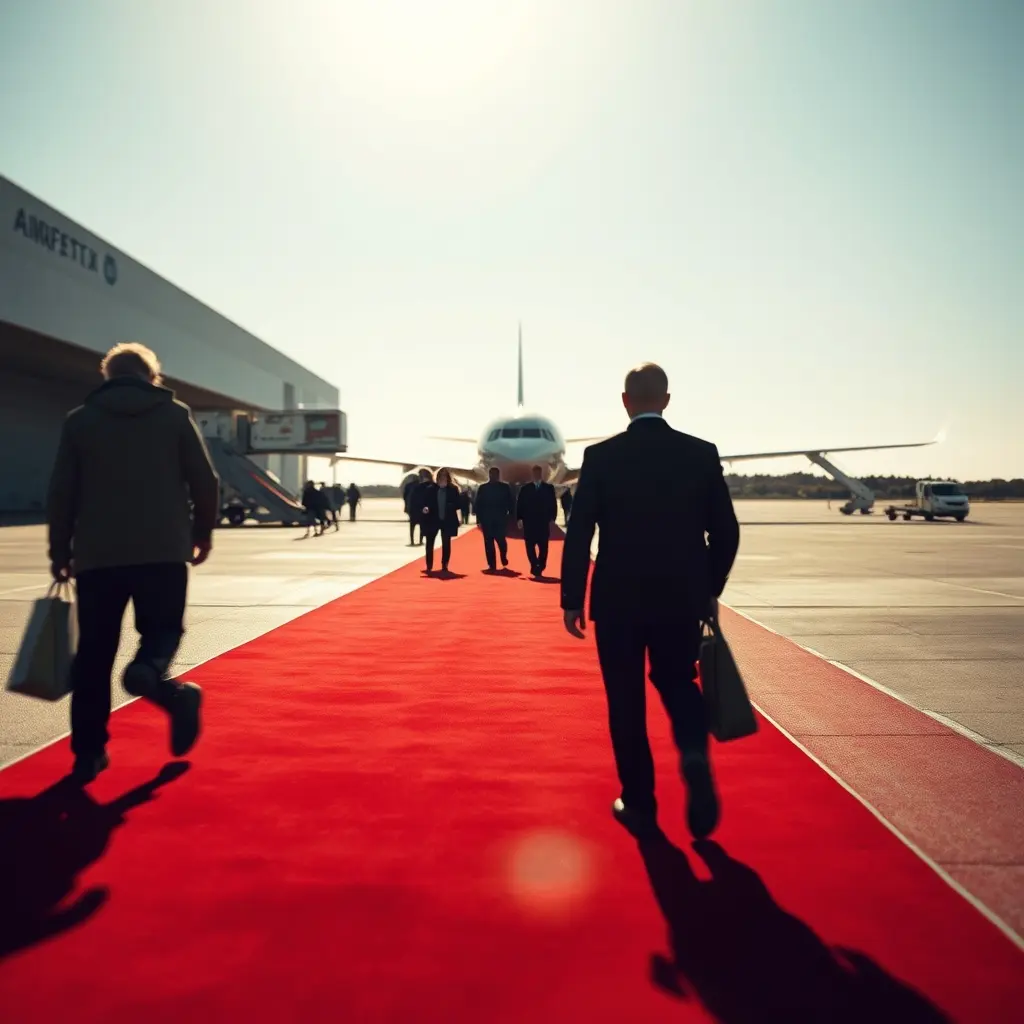
President Trump's decision to greet President Xi Jinping personally at Joint Base Andrews, rather than waiting for his arrival at the White House, was a deliberate diplomatic choice. The ceremony was designed to be elaborate, featuring a 100-foot red carpet leading from Xi's plane, a 21-person honor guard, and a flyover by two B-1 bombers. The event also included the presentation of national flags and anthems, and bouquets of flowers presented to Xi and his wife, Peng Liyuan, by American children. This level of personal engagement and ceremonial display is intended to signify the importance of the bilateral relationship and reciprocate the grandeur of Trump's earlier visit to China.
The protocol for state visits typically involves the receiving head of state welcoming their guest at the executive residence. However, Trump's personal attendance at the airbase, a rare occurrence, highlights his administration's emphasis on personal diplomacy and signaling warmth. This mirrors actions taken during the visit of Russian President Vladimir Putin in August 2025, where Trump also offered a personal greeting and shared a limousine ride. While Xi and his wife departed in their own vehicle after the ceremony, the initial planeside welcome set a tone of high-level engagement for the duration of the three-day visit.
Who is Affected and How
The most immediate impact of this high-profile welcome is on the diplomatic relationship between the United States and China. For President Xi Jinping, the personal reception by President Trump signals a recognition of China's global standing and an effort by the U.S. to manage the complex relationship. For President Trump, the event serves to showcase his personal diplomatic style and his ability to engage directly with world leaders, potentially bolstering his image domestically and internationally. The elaborate ceremony is also intended to set a positive tone for discussions on critical issues such as trade, artificial intelligence, and regional security.
Beyond the leaders themselves, the visit and its accompanying fanfare affect various stakeholders. Tech industry leaders, including Jensen Huang of Nvidia and Elon Musk of SpaceX, are expected to attend the state dinner, indicating the importance of technological advancements and economic ties in the bilateral discussions. For U.S. lawmakers and foreign policy experts, the visit prompts debate about the appropriate balance between diplomatic engagement and addressing concerns over China's policies. The public in both countries will observe the proceedings, with the optics of the visit shaping perceptions of the U.S.-China relationship. The visit's success or failure in achieving tangible outcomes will have broader implications for global trade, technological development, and international stability.
What Happens Next
Following the arrival ceremony, President Xi Jinping's state visit will continue with a series of formal events, including an arrival ceremony at the White House and a review of troops. A state dinner is scheduled for Thursday evening, with notable figures from the tech industry in attendance. Behind closed doors, the leaders are expected to engage in substantive discussions on pressing bilateral issues, though expectations for major breakthroughs are reportedly low. The visit concludes on Friday with a private tea with the Trumps and a tour of the National Archives, focusing on historical documents that underscore the U.S.-China relationship.
The long-term implications of this visit will depend on whether the high-level engagement can translate into progress on contentious issues like trade imbalances, intellectual property rights, and geopolitical competition. A successful visit could lead to a period of managed competition and continued dialogue, while a failure to address key concerns might exacerbate existing tensions. The outcome will shape the trajectory of U.S.-China relations for the foreseeable future, influencing global economic dynamics, technological innovation, and international security architectures. Future interactions will likely involve a continuation of both strategic engagement and underlying competition, with ongoing assessments of each side's adherence to any understandings reached during this visit.
Share this article
Send the story to readers on social or messengers.
Comments
Loading comments…

New Times Reporter
Editorial coverage from New Times Reporter.