How will the Nancy Grace Roman Space Telescope change our view of the universe?
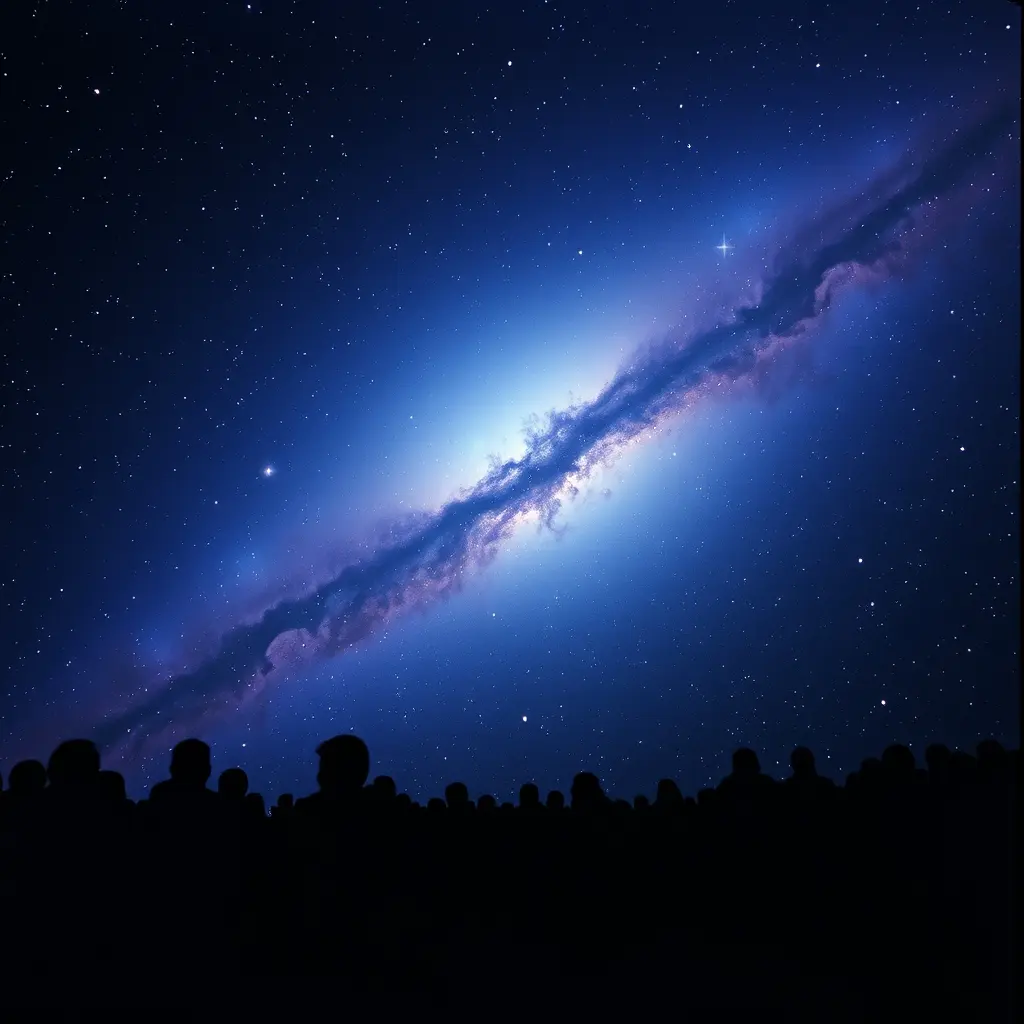
The Nancy Grace Roman Space Telescope, launched on Sunday, represents a significant advancement in astronomical observation, aiming to answer fundamental questions about the universe, including whether we are alone. Its mission focuses on mapping vast swathes of the cosmos, discovering and characterising exoplanets, and investigating the nature of dark energy and dark matter, which together constitute about 95% of the universe.
The telescope's primary objective is to provide unprecedented views of the universe. With a field of vision 100 times larger than both the Hubble and James Webb Space Telescopes, Roman is designed to conduct sweeping surveys. These surveys will allow scientists to create detailed 'cosmic maps' that reveal the distribution of galaxies across different epochs of cosmic time. By analysing these maps, researchers hope to gain a deeper understanding of dark matter, the invisible gravitational glue of the universe, and dark energy, the mysterious force driving its accelerated expansion.
The Background You Need to Know
The Nancy Grace Roman Space Telescope is named in honour of physicist Nancy Grace Roman, Nasa's first chief astronomer in the 1960s and its first female executive. She was instrumental in securing congressional approval for the Hubble Space Telescope and later identified dark energy as one of its most significant potential discoveries. The launch of Roman follows the successful deployment of the James Webb Space Telescope in 2021, another powerful observatory designed to peer into the universe's past. However, Roman's distinct capability lies in its expansive field of view, allowing for broader surveys than Webb's more focused observations.
How the Roman Telescope Works
After its successful launch from the Kennedy Space Center in Florida on a SpaceX rocket, the Roman telescope began a 100-day journey to its designated orbit. This vantage point is approximately one million miles from Earth, a location chosen to minimise interference from the Moon and Earth's infrared light, which could otherwise affect its sensitive infrared cameras. Once in position, Roman will begin its primary mission. Its large mirror and wide-field instrument will capture panoramic images, effectively surveying large areas of the sky. This capability allows it to detect faint light from distant galaxies and exoplanets, providing data for detailed analysis of cosmic structures and planetary atmospheres.
Who is Affected and How
The primary beneficiaries of the Roman telescope's mission are scientists and astronomers worldwide, who will gain access to a wealth of new data. For the general public, the telescope's discoveries could profoundly impact our understanding of our place in the cosmos. The quest to answer 'Are we alone?' by discovering and characterising exoplanets, potentially identifying habitable worlds, is a central goal. The telescope is expected to discover tens of thousands, possibly up to 100,000, new exoplanets. Its observations of dark energy and dark matter could also lead to a paradigm shift in cosmology, altering our fundamental understanding of the universe's composition and evolution.
What Happens Next
Following its 100-day journey, the Nancy Grace Roman Space Telescope will commence its scientific operations. Its primary mission is planned for five years, with a goal to operate for ten years. During this period, it will systematically survey the sky, cataloguing billions of galaxies and thousands of exoplanets. The data collected will be made available to the scientific community for analysis. Potential outcomes include the discovery of Earth-like planets, a breakthrough in understanding dark energy's role in cosmic expansion, or the mapping of dark matter distribution with unprecedented detail. The success of these outcomes hinges on the telescope's continued functionality, the accuracy of its instruments, and the ability of scientists to interpret the vast amounts of data it will generate.
Share this article
Send the story to readers on social or messengers.
Comments
Loading comments…

New Times Reporter
Editorial coverage from New Times Reporter.