What celestial events happen in August 2026?
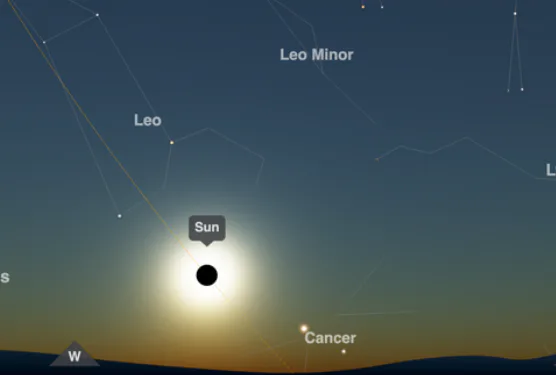
August 2026 promises a spectacular display for skywatchers, highlighted by a partial solar eclipse on August 12 and a partial lunar eclipse on August 27. These events, visible across North America, offer a chance to witness the dynamic interplay of the Sun, Earth, and Moon.
The partial solar eclipse on August 12 will occur as the Moon passes between the Sun and Earth, casting a shadow and obscuring a portion of the Sun. The exact visibility and coverage will depend on the observer's location. A partial lunar eclipse, on the other hand, happens when the Earth passes between the Sun and Moon, and its shadow partially covers the Moon. This event is scheduled for August 27.
The Background: Celestial Mechanics
Celestial events like eclipses are predictable occurrences governed by the orbital mechanics of the Earth, Moon, and Sun. Eclipses happen when these three bodies align in a specific way. A solar eclipse occurs when the Moon aligns directly between the Sun and Earth, blocking the Sun's light and casting a shadow on Earth. A lunar eclipse happens when the Earth aligns directly between the Sun and Moon, casting its shadow on the Moon. The timing and type of eclipse (total, partial, or annular) depend on the precise alignment and the distances between the celestial bodies.
August 2026's events are part of ongoing astronomical cycles. While solar eclipses happen somewhere on Earth roughly every 18 months, and lunar eclipses occur about twice a year, specific visibility for any given location is less frequent. The partial solar eclipse on August 12, 2026, will be visible across much of North America, offering a significant viewing opportunity for many.
How Eclipses Work
A solar eclipse occurs when the Moon's orbit brings it directly between the Sun and Earth. The Moon casts two shadows: a darker, central shadow called the umbra, and a lighter, outer shadow called the penumbra. If you are in the umbra, you experience a total solar eclipse. If you are in the penumbra, you see a partial solar eclipse, where only a portion of the Sun is obscured by the Moon.
For a partial solar eclipse, the alignment isn't perfect for totality. The Moon covers only a fraction of the Sun's disk. This can still be a dramatic sight, with the Sun appearing to have a bite taken out of it. It is crucial to use proper eye protection, such as certified eclipse glasses, when observing any solar eclipse to prevent permanent eye damage.
A lunar eclipse happens when the Earth moves between the Sun and the Moon, and the Earth's shadow falls upon the Moon. The Earth also casts an umbra and a penumbra. During a partial lunar eclipse, the Moon passes through only a portion of the Earth's umbra. This causes a dark shadow to creep across the lunar surface, changing its appearance. Unlike solar eclipses, lunar eclipses are safe to view with the naked eye.
Who is Affected and How
Skywatchers across North America will be able to witness the partial solar eclipse on August 12, 2026. The degree of coverage will vary by location, with some areas seeing more of the Sun obscured than others. This event provides an opportunity for amateur astronomers, educators, and the general public to engage with astronomy.
For those interested in astrophotography, these eclipses offer unique subjects. The partial lunar eclipse on August 27 will be visible from many parts of the world, including Europe, Africa, Asia, and Australia, providing a different viewing audience. Both events can spark public interest in science and encourage educational activities related to space and astronomy.
What Happens Next
Following the August 2026 eclipses, skygazers can anticipate other celestial phenomena. While no other eclipses are scheduled for the remainder of 2026, the astronomical calendar is always full of events. Meteor showers, such as the Perseids in August and the Geminids in December, occur annually. Planetary conjunctions, where planets appear close together in the sky, also provide viewing opportunities throughout the year.
The next significant solar eclipse visible in North America will be a total solar eclipse on April 8, 2024, which will traverse a path from Mexico, through the United States, and into Canada. This event is highly anticipated due to its totality path, which will offer a dramatic experience for millions. The frequency of such events means that planning and awareness are key for those wishing to witness them.
Share this article
Send the story to readers on social or messengers.
Comments
Loading comments…

Grant Mitchell
Grant Mitchell focuses on security and geopolitics, with deep coverage of conflict and diplomacy.